A .com that costs one cent today can cost more than $20 a year from year two. That gap between the first-year price and the renewal price is the single biggest difference between registrars, and a sale banner makes it easy to miss. This guide puts the renewal column next to the sale price for 15 registrars, using nothing but their own pricing pages.
Why the Registrar You Pick Still Matters in 2026
The registrar you pick decides what you pay every year after the first, how easy it is to leave, and which extras you get for free. Choosing well matters because you will probably keep the name for years. The latest Domain Name Industry Brief counts 169.8 million .com registrations as of September 30, 2026 (DNIB Quarterly Report Q3 2026), and each one renews somewhere, every year.
So why does a domain that looks like a commodity come with so many different price tags? Because every registrar buys the same .com from the same registry at the same wholesale price, then decides how much to add, when to discount, and what to bundle. If you are new to the whole process, our step-by-step .com registration walkthrough covers the basic steps before you compare sellers.

One more reason to read the renewal line this month: the .com wholesale price changes on November 1, 2026. More on that in the comparison table.
Key Takeaways
The internet closed the third quarter of 2026 with 411.6 million domain name registrations (DNIB Quarterly Report Q3 2026), and each one renews at whatever its registrar charges that year. Pick a registrar on its renewal price and its transfer rules, not on the first-year sale.
Quick Picks: The Best Domain Registration Sites by Need
The best domain registration site depends on what you need: Porkbun lists .com at $11.08 for registration, renewal and transfer alike (Porkbun .com pricing), while builders such as Wix and Squarespace put zero DNS setup ahead of the lowest price. Here is the short version.
| If you want… | Look at | Why, from the official pages |
|---|---|---|
| The lowest long-term .com cost | Cloudflare Registrar or Spaceship | Cloudflare adds no markup to the registry and ICANN price; Spaceship lists a .com renewal just under $10, plus the ICANN fee |
| One flat price every year | Porkbun | Same .com price for registration, renewal and transfer, fees included |
| The cheapest first year | Spaceship or GoDaddy | Sale prices under $9, or one cent with a three-year term at GoDaddy |
| An easy start with no DNS work | Squarespace, Wix or Shopify | The domain connects to your site automatically |
| A domain inside your cloud account | AWS Route 53 or Azure | Billing and DNS live next to your servers |
| Help and phone support for a business | Network Solutions or IONOS | Bundles aimed at small businesses, with intro pricing |
Which one would we pick for a first personal site? Our take: a registrar with a flat renewal price and free privacy, then a separate host. That keeps the domain portable if you change hosts later.
How We Compared Registrars (Official Pricing, Same Day, No Purchases)
We compared 15 registrars on October 23, 2026, by reading each one’s public .com price page and help documents on the same day; Spaceship, for example, lists its $0.20 ICANN fee as a separate line (Spaceship domains). We did not buy a domain at any of them.
That last point matters. This is a comparison of published prices and published terms, not a review of support quality or checkout flows. If a registrar hides a fee until the cart, a page-by-page comparison will miss it, and we say so where a page leaves the renewal price out.
The rules we followed:
- One extension for every registrar: .com, because it is the most common and every registrar sells it.
- First-year price and renewal price in separate columns, never just the sale price.
- Free WHOIS privacy counted only when the registrar’s own page says it is included.
- Prices in US dollars as shown to a US visitor, before tax.
- Promo codes and new-customer offers noted, but not used as the headline price.
Why so strict about renewals? Because the first year lasts twelve months and the renewal lasts as long as you own the name. Search for “top domain registration sites” and the first result is a Reddit thread asking which registrars are good. The questions there are almost always about the second-year bill, not the first.
Registrar, Registry or Reseller: Who You Actually Buy From
You buy a domain from a registrar, but the name itself lives with a registry: ICANN explains that one company, the registry, is in charge of every domain under a given extension, while registrars sell those names and pay the registry a set per-domain fee (ICANN: What Does ICANN Do?). For .com, that registry is Verisign.
Here is how the three layers fit together:
- The registry runs the master list for one extension. Verisign runs .com and .net; every .com sale anywhere ends up in its database.
- The registrar holds an ICANN accreditation and talks to the registry directly. Cloudflare, Porkbun, Namecheap and GoDaddy are registrars.
- The reseller sells domains under its own brand but places the order through a registrar’s system. Many web hosts and agencies work this way.
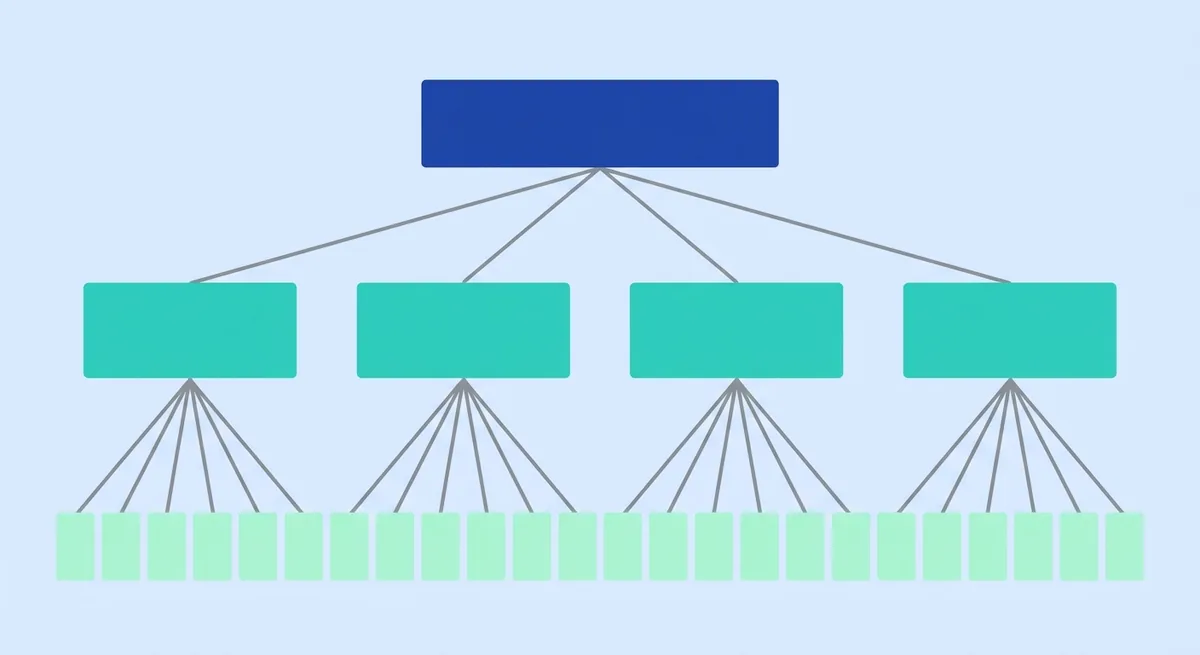
Some companies play more than one role. Tucows describes itself as the world’s second-largest domain registrar, operating as OpenSRS, Enom, Ascio and Hover (Tucows). OpenSRS and Enom mostly serve resellers; Hover sells straight to the public.
Does it matter which layer you deal with? Mostly when something goes wrong. A reseller adds one more company between you and the registry, so a transfer or a dispute can take an extra step. To see who your current registrar really is, run your domain through a WHOIS or RDAP lookup; our domain registration lookup guide shows how.
Comparison Table: .com Price, Renewal and Privacy
On October 23, 2026, the .com renewal prices on official pages ranged from $9.98 at Spaceship (Spaceship domains) to $38.38 at Gandi (Gandi .com pricing). The table below lines up every registrar in this guide by price level rather than to the cent, because sale prices change every few weeks. Each level is per year for one .com, as shown that day; the registrar sections that follow give the exact figure each official page listed.
| Registrar | .com first year | .com renewal | Free WHOIS privacy | Catch to know |
|---|---|---|---|---|
| Cloudflare Registrar | At cost | At cost | Yes (redaction) | Must use Cloudflare nameservers |
| Porkbun | About $11 | About $11 | Yes | ICANN fee already included |
| Spaceship | Under $9 on sale | About $10 | Yes | ICANN fee shown as its own line |
| Namecheap | About $11 on sale | High teens | Yes, lifetime | Lowest promo is for new customers only |
| Gandi | About $11 | Above $35 | Check at checkout | Prices exclude tax |
| Hover | About $19 | About $19 | Yes, on supported domains | No sale pricing on .com |
| GoDaddy | One cent | Above $20 | Yes | Three-year purchase required |
| Network Solutions | About $12 | Above $20 | Listed among free tools | Renewal nearly doubles |
| IONOS | $1 intro offer | Shown at checkout | Check in cart | Read the renewal line before paying |
| Bluehost | Free with hosting | Shown at checkout | Check in cart | Free year needs a hosting plan |
| Squarespace | Shown in domain search | Shown in domain search | Yes, eligible domains | Taxes and fees included in the price |
| Wix | Free with annual plan | Wix price list | Yes | Free year needs a site plan |
| Shopify | Shown in admin | Shown in admin | Yes, eligible extensions | Built for Shopify stores |
| AWS Route 53 | $16 | $16 | Optional setting | Hosted zone billed monthly |
| Azure App Service | Yearly fee | Yearly fee | Yes, most extensions | Paid App Service tier required |
What surprised us when lining up these columns was how little the first-year column predicts. GoDaddy is cheapest in year one and among the most expensive from year two. Porkbun sits in the middle on day one and stays there.
A timing note. Verisign’s wholesale .com fee rises “from $10.26 to $10.97 effective Nov. 1, 2026” (Verisign Q1 2026 earnings release), and Namecheap’s .com page already warns that “Registry prices for .com are rising” (Namecheap .com). Expect most .com prices in this table to move up by roughly that amount.
Only care about the lowest bill? Our cheapest domain registration guide ranks the same registrars by price alone, across more extensions.
Cloudflare Registrar: At-Cost Pricing With Fewer Extras
Cloudflare Registrar sells domains at cost: its FAQ says you “pay the registry and ICANN list price with no markup” (Cloudflare Registrar FAQ). For .com, that means the Verisign fee plus the $0.20 ICANN fee, and nothing on top.
That puts Cloudflare at or near the floor for long-term cost: a registrar can only undercut it by selling below wholesale, which is what Spaceship’s listed renewal of $9.98 plus the ICANN fee did on October 23. Its product page also says it supports “over 430 top-level domains” and includes free WHOIS redaction, free DNS and one-click DNSSEC (Cloudflare Registrar).
So what’s the catch? There are three, all from Cloudflare’s own documentation:
- Every domain on Cloudflare Registrar uses Cloudflare nameservers. If you need different nameservers, the FAQ says you have to move the domain to another registrar.
- You can only transfer a domain in once it is active on a Cloudflare full setup. In practice, you move your DNS to Cloudflare first and the registration second.
- Renewals are final, with no refunds, and a domain cannot carry more than 10 years on its term.
Cloudflare also applies domain locking to help prevent unauthorized transfers, and its product page says Enterprise customers can add advanced protection, such as registry lock, for high-profile domains.
Who is it for? Developers and site owners who already run their DNS on Cloudflare will find it the easiest money they ever save. If you want email hosting, a website builder or phone support bundled with the domain, look elsewhere.
Porkbun and Spaceship: Low Prices With Free Privacy
Porkbun and Spaceship both keep .com close to wholesale and include WHOIS privacy for free; Porkbun charges $11.08 for registration, renewal and transfer, and its price list says “All prices include ICANN and any other fees” (Porkbun domain pricing).
Porkbun
Porkbun’s pitch is that the renewal matches the sale price. Its .com page promises “No surprise renewals: The price you see is the price you pay, year after year” (Porkbun .com pricing). Each .com comes with:
- free WHOIS privacy,
- a free Let’s Encrypt SSL certificate, renewed automatically,
- free DNS management, which Porkbun says runs on Cloudflare,
- up to 20 email forwards and free URL forwarding.
Is a flat price the same as the lowest price? Not quite. Cloudflare will usually come in slightly under Porkbun for .com. But Porkbun lets you point your nameservers anywhere, which Cloudflare does not.
Spaceship
Spaceship lists the lowest first-year .com of the low-markup group: $8.88 on sale, with renewal at $9.98 (Spaceship domains). Spaceship shows the $0.20 ICANN fee as its own line, so add it to every price.
Free domain privacy and auto-renewal come standard. Spaceship also sells hosting and email in the same account, though you don’t need them to keep a domain there.
Our take: Porkbun if you value a single number you never have to recheck; Spaceship if you want the lowest headline and don’t mind adding the ICANN line yourself.
Namecheap, Gandi and Hover: Long-Running Retail Registrars
Namecheap, Gandi and Hover all sell .com for between $11 and $19 in year one, but their renewals split widely: Namecheap renews .com at $18.48 (Namecheap .com), Hover at $18.99 and Gandi at $38.38.
Namecheap
Namecheap lists .com at $11.28 for the first year on a 25% sale, then $18.48 a year to renew. New customers can get a lower first year with a promo code, “limited to one domain purchase per user/household.” Each domain includes “Free lifetime privacy protection” plus free BasicDNS and DNSSEC.
The same page offers savings on multi-year renewals placed before November 1. That’s worth a look if you already hold a .com there and want to renew before the wholesale change.
Gandi
Gandi’s US price page lists .com registration at $11.00, but renewal at $38.38, with a smaller discount for multi-year renewals (Gandi .com pricing). Prices exclude taxes. A transfer in costs $11.00 and Gandi notes the ICANN rule of “60 days minimum after domain registration.”
Each Gandi domain includes a free SSL certificate, LiveDNS nameservers with DNSSEC, and 10,000 aliases and forwarding addresses. Late renewal runs for 45 days after expiry, and a restore after that costs $55.00.
Is the renewal a dealbreaker? For one domain held for a decade, nine renewals at today’s list prices put Gandi roughly $250 above Porkbun. Gandi makes more sense if you value its email aliases or already manage a portfolio there.
Hover
Hover keeps it simple: .com costs $18.99 to register, renew or transfer, and “FREE WHOIS privacy” comes with supported domains (Hover domain pricing). Renewal discounts start once you hold ten or more domains. Hover is part of Tucows, so it sits on one of the largest registrar platforms in the world.
Hover’s flat price is nearly $8 a year above Porkbun’s flat price for .com. You are paying for a cleaner interface and a smaller product list, not for a better domain.
GoDaddy, Network Solutions, IONOS and Bluehost: Bundles and Renewal Jumps
These four registrars lead with low first-year prices and recover the difference at renewal or through bundles: GoDaddy’s .com page offers the first year for $0.01 when you buy three years, with “Additional year(s) $22.99” (GoDaddy .com).
GoDaddy
GoDaddy says it manages “over 82+ million domains” for more than 20 million customers (GoDaddy domains). Its domain search page also runs a separate one-year offer for new customers. Free WHOIS privacy, email impersonation protection (DMARC) and a registrar transfer lock come included.
Transfers in follow the same pattern: a one-cent first year, with a three-year term recommended for the bigger saving.
Here’s the catch: the one-cent year only works with a three-year purchase, so your first bill covers the two full-price years too. Thinking about leaving? We cover the move in detail in the best GoDaddy alternatives for domain registration.
Network Solutions
Network Solutions lists .com at $11.99 with “Renews at $22.99” (Network Solutions domain registration). Its page lists Domain Privacy + Protection among the tools that come free with a registration, alongside a coming-soon page and a link-in-bio page. After expiry there is a 30-day grace period to renew, then a reinstatement fee.
IONOS
IONOS advertises .com at “$1/1st year” as an intro offer (IONOS .com domains). Each .com includes a free Wildcard SSL certificate on the initial contract, up to 10,000 subdomains, Domain Connect for easier app setup and a transfer lock. The .com page leads with the intro price, so read the renewal line in your cart before paying.
Bluehost
Bluehost gives a free domain for the first year with its Web Hosting and WordPress hosting plans, covering extensions such as .com, .net and .online (Bluehost domains). The page lists WHOIS privacy among its domain features but also describes Domain Privacy + Protection as something you add, so check the cart before paying. Transfers in typically take five to seven days. If WordPress is your platform, our guide to web hosting for WordPress compares managed and shared plans.
Is a free domain with hosting a good deal? It can be, for year one. But the domain then renews on the host’s price list, and moving the host later means untangling two services at once. Our guide to domain vs hosting explains why many site owners keep the two apart. Domain.com takes a similar bundle-first approach; see our Domain.com pricing breakdown.
Website Builders That Sell Domains: Squarespace, Wix and Shopify
Website builders sell domains mainly so your site works without DNS setup: Squarespace’s domain page promises that “the price you see is the price you pay,” with taxes and fees counted in and WHOIS privacy included for eligible domains (Squarespace Domains). The trade-off is that you manage the domain inside a tool built for one product.
Squarespace and the end of Google Domains
Squarespace is also where Google Domains went. Its Help Center states: “On September 7, 2023, Squarespace acquired all domain registrations and their associated customer accounts from Google Domains” (Squarespace Help Center). Former Google Domains customers now log in at Squarespace, where an account was created for them automatically if they didn’t have one.
A few Google Domains features did not survive the move. Squarespace lists Dynamic DNS and ACME TLS/SSL certificates as not supported for migrated domains. Google’s Cloud Domains FAQ confirms that Squarespace Domains is now the registrar for domains managed through Cloud Domains (Google Cloud Domains FAQ). If you relied on either feature, check your DNS records after the move.
Wix
Wix offers “a free domain for a year with any annual site plan,” says it adds no extra charges for ICANN, and includes WHOIS privacy, free SSL and DNSSEC (Wix domains). That covers the “Wix private domain registration” question: privacy comes with the domain. For the Wix domain registration cost after the free year, check the renewal line in your Wix billing page, since it follows Wix’s own price list.
Shopify
Shopify connects a domain bought through it to your store automatically. You can add up to 20 domains or subdomains to a store, or 1,000 on Shopify Plus, and each gets a free TLS certificate (Shopify Help Center). Shopify’s domains page says WHOIS privacy is free on eligible extensions (Shopify domains).
Should you buy your domain from your builder? If you are certain you’ll stay on that platform, it is the fastest path. If there is any chance you’ll switch, a standalone registrar keeps the domain independent of your site.
Cloud Providers: AWS Route 53 and Azure
Cloud platforms sell domains so your DNS and billing stay inside one account: AWS raised the Route 53 .com price from $15 to $16 a year for registration, renewal and transfer on July 1, 2026 (AWS Route 53 domain pricing). Neither AWS nor Azure is the cheapest place for a domain, and neither tries to be.
Amazon Route 53
When you register a domain with Route 53, it automatically creates a hosted zone and charges “a small monthly fee” for it on top of the yearly registration (AWS Route 53 documentation); the current rate is on the Amazon Route 53 pricing page. Delete the hosted zone within 12 hours of registering and there is no charge for it.
A few more rules from AWS’s own pages:
- AWS credits cannot pay for domain registration.
- Registrations and renewals are not refundable.
- You can’t rename a domain after you register it; a typo means buying a second domain.
- Route 53 also charges a small fee for the DNS queries your domain receives.
AWS also warns against using a Route 53 domain as the root user’s email domain on the same account. If the account is closed or suspended, the domain is suspended within five days, which can lock you out of account recovery.
Azure App Service domains
Azure sells domains through App Service, and Microsoft’s documentation says App Service domains “use GoDaddy for domain registration and Azure DNS to host the domains” (Microsoft Learn). Only nine extensions are available: com, net, co.uk, org, nl, in, biz, org.uk and co.in.
There are conditions. The app’s App Service plan must be a paid tier, not Free (F1), and App Service domains are not supported on free trial or credit-based subscriptions. Privacy protection is on by default and included in the yearly fee, except on co.uk, in, org.uk, co.in and nl. Azure DNS usage charges apply on top.
Who should buy here? Teams that already run the app on Azure and want one bill. Everyone else gets more choice and lower renewals at a standalone registrar.
Checklist Before You Register a Domain
Before you pay for any domain, check five things; the most overlooked is the transfer lock, because the ICANN Transfer Policy lets a registrar refuse a transfer requested within 60 days of the domain’s creation date (ICANN Transfer Policy). If you pick the wrong registrar, you are staying for at least two months.

Run through this list at checkout:
- Read the renewal price, not the sale price. Multiply it by the years you expect to keep the name.
- Confirm WHOIS privacy is free and switched on. Some registrars include it; others sell it as an add-on.
- Turn on auto-renew and add a backup payment method. An expired domain can go into a paid restore period, like Gandi’s $55.00 restore fee.
- Turn on two-factor authentication for the registrar account. Whoever controls the login controls the domain.
- Know the transfer rules. The same ICANN policy also allows a 60-day lock after a transfer and, unless you opt out, after a change of registrant; if the registrar gives you no way to remove a transfer lock yourself, it must remove it within five calendar days of your request.
Is the 60-day rule changing? ICANN’s GNSO Council adopted the final report of its Transfer Policy Review on March 12, 2025, and sent it to the ICANN Board (GNSO Transfer Policy Review). Until new rules take effect, plan around 60 days.
Our own rule of thumb, from reading all 15 price pages side by side: if a registrar’s .com renewal sits more than about $10 above the wholesale price, you are paying for a bundle. That can be fine, as long as you chose the bundle on purpose. If you also need a host, our website hosting buyer’s guide covers the plan types to compare next, and our Cloudways hosting review looks at one managed cloud host in detail.
References
- DNIB: The DNIB Quarterly Report Q3 2026
- ICANN: What Does ICANN Do?
- ICANN: Transfer Policy
- GNSO: Transfer Policy Review
- IANA: Registrar IDs
- Tucows
- Verisign Q1 2026 earnings release
- Cloudflare: Registrar
- Cloudflare: Registrar FAQ
- Porkbun: Domain pricing
- Porkbun: .com
- Spaceship: Domains
- Namecheap: .com registration
- Gandi: .com pricing
- Hover: Domain pricing
- GoDaddy: .com domains
- GoDaddy: Domain name search
- Network Solutions: Domain registration
- IONOS: .com domains
- Bluehost: Domains
- Squarespace: Domains
- Squarespace Help Center: About the Google Domains migration to Squarespace
- Google Cloud: Squarespace purchase of Google Domains FAQ
- Wix: Domains
- Shopify Help Center: Adding a domain to Shopify
- Shopify: Domains
- AWS: Amazon Route 53 Pricing for Domain Registration (PDF)
- AWS: Registering a new domain
- AWS: Amazon Route 53 pricing
- Microsoft Learn: Buy an App Service domain